
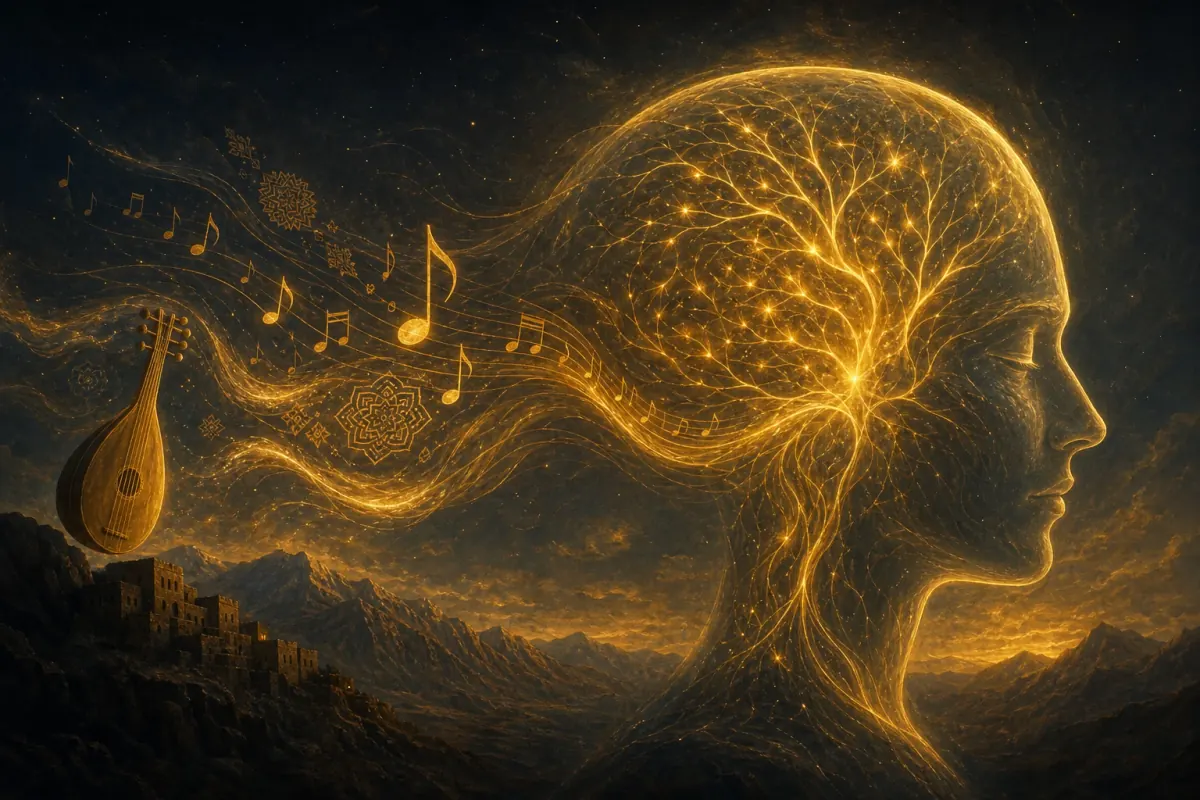
Music is a universal language that everyone can understand and enjoy, and throughout history it has been an inseparable part of human culture. Its ability to stir our emotions and influence our behavior is evidence of music's profound effects on the human mind. The relationship between music and the human mind runs parallel to the history of humanity itself. That is why, throughout history, ancient civilizations regarded the power of music with great importance — its capacity to influence and inspire people and to arouse their emotions. From the rhythmic chants of tribal gatherings to the intricate melodies of classical composers, and on to the present day, music has served as a means of expressing emotions and of connecting and bridging the identities of different cultures.
Neuroscientific research has shed light on the complex interactions between music and the brain. The human brain is structured in a way that makes it ready to respond to music. Listening to music activates several parts of the brain involved in excitement, relaxation and pleasure, as well as in memory. Music can awaken our memories and take us back to special moments to which feelings are attached. Listening to music can trigger the release of serotonin and dopamine — "feel-good" hormones associated with pleasure — which produce the feelings of happiness that draw so many people to music.
Music also plays an important role in brain development, especially in children. Studies have shown that early music education can develop cognitive abilities, language skills and ways of thinking. Music is also an important therapy — a powerful tool for people with neurological conditions such as Parkinson's and Alzheimer's disease — with the ability to improve mood, memory and motor control.
There is undoubtedly a strong connection between music and human emotions. Music has a unique ability to evoke a wide range of feelings. Its rhythm and tempo can affect our heart rate and breathing, and thus our overall physiological state. A sad melody can lead to low mood, while a fast, upbeat melody and rhythm can bring a feeling of energy and vitality — so optimistic, energizing tunes can make us stronger. This is due to the complex interaction between the brain, emotions and the musical elements of rhythm, melody and harmony. This emotional power is rooted in the connection between the brain's musical maps and our past experiences and memories. That is why music can be a powerful tool for regulating our emotional state, helping individuals manage and control stress, anxiety and depression.
Beyond its emotional effects, music can also influence human behavior in subtle yet important ways. Studies examining the relationship between music and aggression show that certain kinds of music may contribute to aggressive behavior — just as music can also promote social connection and cooperation and nurture a sense of community.
For musicians, performing — a complex, high-level act that combines the use of hands and fingers with the expression of the player's feelings — increases psychological pressure when the musician wants to deliver a flawless performance, which creates considerable anxiety and mental strain. At the same time, the joyful reactions of the audience can have a remarkable effect on the musician's state of mind. That is why, by working to understand the psychology of musical performance, a musician can master control of their own psychological state and anxiety, with the goal of presenting an enjoyable performance and showing their playing ability free of stress. Music is far more than a pastime — it is a fundamental aspect of human life, and its powerful effect on our emotions and behavior makes it an influential force across the whole course of our lives. So as we go deeper and understand more about the relationship between music and the brain, we can arrive at ever more fascinating insights into this complex and ongoing relationship.
Translated from Kurdish. Read the original article in Kurdish.