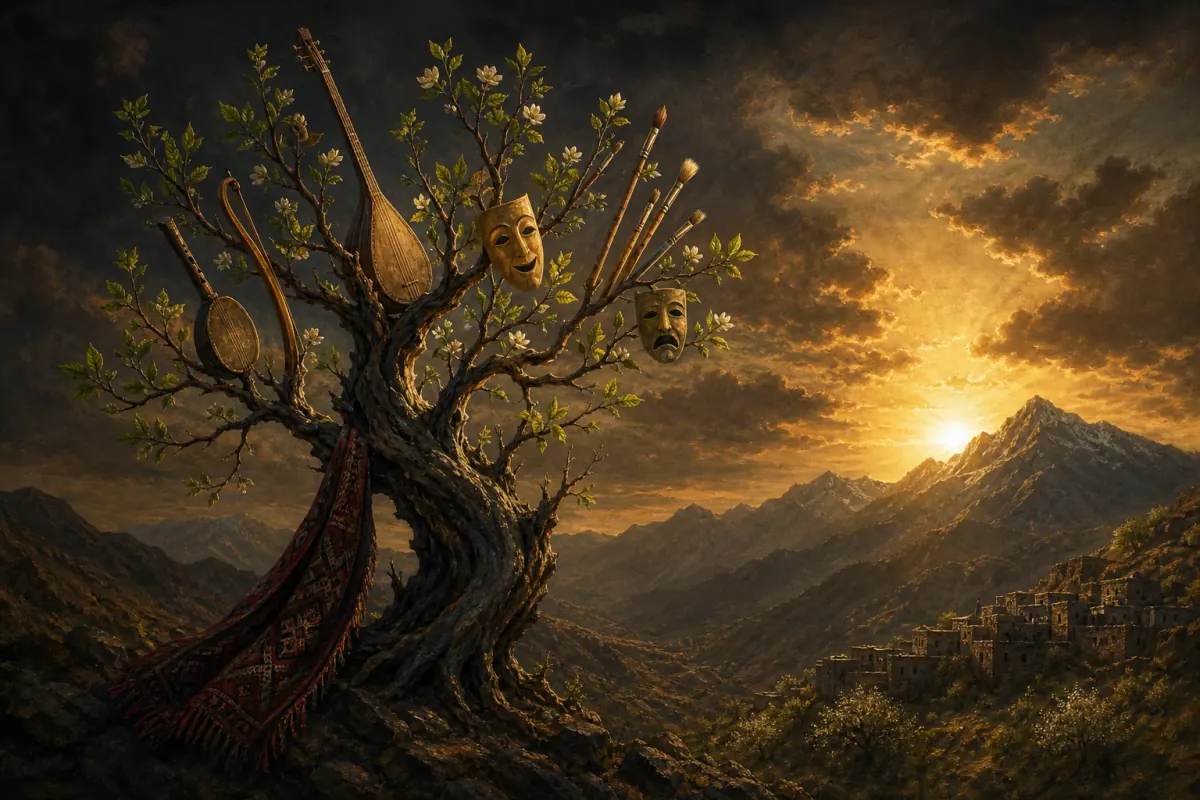
Art is an important component of cultural identity and social development, and it has always been a clear and great mirror of society. While it reflects the culture, history and identity of peoples, it also presents new visions for the future. Art is a necessity for a healthy society: it builds identity and strengthens society, and it is a path to society's growth and progress. Throughout history, the peoples of the world have expressed their feelings through arts such as painting, music, theater, cinema and other artistic fields. That is why any people that is not active and strong in the cultural and artistic sphere will undoubtedly face the danger of losing its identity and cultural heritage. In other words, when traditions, culture and heritage do not reach the new generation, they gradually fade, and future generations become cut off from their past. On the other hand, the absence of art narrows the space for imagination and creativity in society. Moreover, when a people's artistic scene is weak in the eyes of the world, the larger image of that nation shrinks in the world's eyes — since art is one of the most powerful ways a nation can introduce itself to the world and prove its existence.
Therefore, if the value of culture and history is to be taken seriously, steps must be taken to protect and develop art and the cultural sphere. This is a responsibility that governments, cultural and artistic institutions, society and individuals must all shoulder, through collective effort and comprehensive planning.
What can be seen in recent years is that art in Southern Kurdistan is in a phase of decline, and its neglect is serious compared with previous years. Limited support for the field, the education sector's weak attention to art, and the economic obstacles facing the Kurdistan Region's administration have narrowed the opportunities for the arts to grow. This is a reality that many artists and educators in the field have noticed. Clearly it demands attention, reconsideration and serious work to get out of this difficult phase — a decline that must be halted with a broad plan.
If we discuss the causes of art's decline in the Kurdistan Region, we see that for several years art has lacked the institutional and governmental support it deserves. The budgets for artistic activities are often so small that artists cannot rely on them for their projects. The difficult economic situation has also forced many capable people in the field to abandon art and look for more secure work to earn a living, while other artists choose to emigrate abroad because they believe their work will be valued more highly there.
On the other hand, we see that society as a whole has today shifted its attention toward technology, politics, commerce and material profit, leaving little time in daily life for the arts. In addition, the education sector has to some extent neglected the arts in schools and universities, which limits this generation's exposure to art and creativity.
Despite all these factors, there is still an opportunity to halt the decline and find solutions that point toward revival — ones that can help bring new life to the field. Keeping art alive and moving it forward undoubtedly requires the cooperation of every sector of society: governments must provide funding and support, universities must strengthen their programs in this field, non-governmental organizations must broaden their community programs, and individuals in society must also see the value of art as important and take part in its activities.
Through investment by both government and private institutions — increasing and securing stable budgets for artists and institutions — the resources artists need to continue their work can be provided. Festivals, concerts, art exhibitions, theater performances and film and cinema production must also be supported, and competitions in these fields should be organized regularly to advance artistic activity.
Another aspect is education and teaching, because any system that does not give art a strong place in education puts that generation's upbringing at risk, both in creative ability and in cultural identity. When art lessons become part of the curriculum in schools, children learn creativity, critical thinking and cultural awareness from an early age. Universities and institutions of higher education are also responsible for offering specialized programs in these fields and for strengthening centers of cultural research — not only in art departments but across all departments and colleges — as well as for providing scholarships to talented students in the arts. This will not only produce professional artists; it will also inspire teachers and researchers in cultural fields, who will undoubtedly influence future generations to see the value of art not merely as a pastime but as part of their cultural identity.
The media can also play a powerful role in advancing the arts by creating cultural exchange programs between different cultures and building connections between international and local artists, which helps generate new ideas. This is a good incentive for talented people in the arts at home.
Beyond these, non-governmental organizations (NGOs) and government cultural institutions can create opportunities for people of all ages to take part in free or low-cost artistic courses and activities, such as short courses and workshops. Art centers and cultural festivals can also show young people practical paths for learning and developing their talents, and support such ideas and initiatives with funding and facilities, so that people of every age and every social class benefit — not only professionals in the field. In addition, there should be efforts to connect local artists with global platforms by using international networks, offering seminars and workshops, and organizing artistic meetings. For example, NGOs in many countries around the world have offered free arts programs to communities that, for whatever reason, are in cultural retreat. This proves that even in difficult circumstances, art can grow toward revival instead of decline.
Translated from Kurdish. Read the original article in Kurdish.