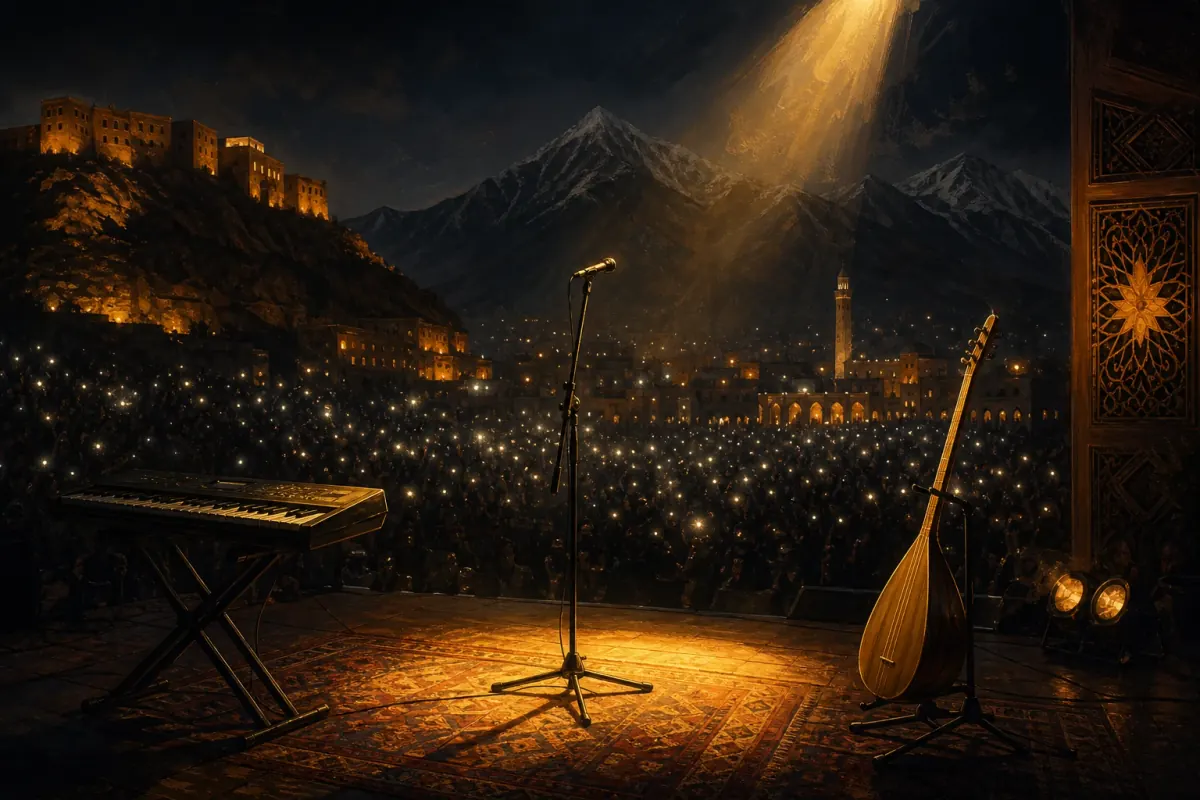
For many Kurds who grew up around the turn of the millennium, Zakaria Abdulla was the sound of the car stereo, the wedding hall and the satellite channel all at once. An Erbil-born singer and keyboardist who built his career in Sweden, he released a run of albums between 1998 and 2010 that mixed Kurdish melodies with the polished pop production of the time. His songs still circulate constantly online, and his name remains one of the most searched Kurdish music names on Sorani Wikipedia.
This biography covers where he came from, how his career unfolded album by album, and which songs to start with.
Quick facts
- Name: Zakaria Abdulla (Sorani: زەکەریا عەبدوڵڵا; Kurmanji: Zekerîya Ebdullah)
- Born: Erbil, Kurdistan Region of Iraq. Most sources give 1976; the exact date differs between sources (see below)
- Based in: Sweden from 1993
- Genre: Kurdish pop, drawing on Sorani and Badini folk melody
- Instruments: Voice, keyboard
- Albums: Seven records from 1998 to 2010
- Known for: Qeder, Ha Gulê, Boçî Hatî, Bigerêwe, Daye
Early life in Erbil
Zakaria Abdulla was born in Erbil, the capital of the Kurdistan Region. The Sorani site Zaniary places his childhood in the city's Tayrawa neighbourhood and describes a family that loved the arts, where his interest in music showed early.
His exact birth date is one of those details where sources disagree. English Wikipedia gives 25 December 1976, Sorani Wikipedia gives 25 January 1976, and Zaniary gives 1974. We think the honest answer is "the mid-1970s, most likely 1976", and we'd rather say that than pick a date we can't confirm.
What is not in doubt is the timing of his departure. In 1993, in the difficult years after the 1991 uprising, he moved to Sweden. Like many Kurds who left in that period, he joined a growing diaspora whose music scene was small, close-knit and hungry for new sounds. You can read more about that world in our article on Kurdish diaspora music.
Career: from keyboard player to headline singer
Zakaria did not arrive in Sweden as a star. According to both English and Sorani Wikipedia, he started out as a keyboardist, playing with other Kurdish singers. Zaniary adds that he also composed music for other artists in those early years. That background matters: he learned the craft from behind the keyboard, arranging songs for the rhythms of Kurdish dance and the expectations of a live audience, before he stepped forward as a singer.
1998: To Hatî ("You Came")
His debut album, To Hatî, came out in 1998. Sorani Wikipedia calls it the album that opened the door for him. It is short (five tracks), and it already contains Nemzanî, one of the songs people still search for today.
2000: Bigerêwe ("Come Back")
The second album followed in 2000 (Zaniary dates it to late 1999). The title track Bigerêwe became one of his signature songs, and the album also includes Keçe Hewlêrî ("Erbil Girl"), a nod to his home city, and the dance number Serçopî.
2001: Daye ("Mother")
Daye is listed in the Sorani discography as his longer record, with twelve songs. It is arguably his richest collection: Daye, Rêbwar, Ha Gulê, Boçî Hatî and Gulfiroş all come from it. Several titles on this album, such as Ha Gulê and Agir Ketiye Dilê Min, are in Badini (Kurmanji) rather than Sorani. That points to something central about Zakaria's appeal: he sang across the Kurdish dialect line that runs through the Erbil and Duhok regions, and so reached listeners on both sides of it. Our guide to Sorani and Kurmanji music traditions explains why that divide matters.
2002: Rojgar ("Times")
Rojgar, with fourteen tracks, is the album most sources single out as his commercial peak. Wikipedia and Zaniary both describe it as a huge seller, and its music videos were shown widely on Kurdish satellite channels. The sales figures quoted online vary and aren't independently documented, so we won't repeat them here. The album includes Dîlana, Helperkê, Yaran and Gulala.
2004: Têlînaz
Têlînaz is his longest album, with fifteen tracks. It moves easily between Sorani and Badini titles: Mêylî Wilat, Şivanê Garê, Were Esmer, Agirî Işq. By this point Zakaria's formula was fully formed: a warm, slightly husky voice, keyboard-led arrangements, and melodies you could dance a govend to.
2007: Gencî Pîr ("Old Youth")
Sources describe Gencî Pîr as an attempt at a fresher sound, with new production techniques and songwriting. English Wikipedia credits a collaboration with the poet Sami Argoshi on this record. Its twelve songs include Dereng Hatî, Min Tu Navê and the title track.
2010: Laparey Spî ("White Page")
His most recent album, Laparey Spî, opens with Qeder ("Fate"), today the song most people type into search engines next to his name. It closes with Bo Kurdistan ("For Kurdistan"). Wikipedia reports that he dedicated the album's proceeds to orphans and children in need; the Sorani article frames the beneficiaries as war refugees.
After 2010
No new studio album has followed. Zaniary reports that after returning to Kurdistan he stepped back from music and went into business, a decision that drew criticism from fans and fellow artists. His most visible appearance since was a concert in Erbil on 22 September 2017, in the days before the Kurdistan Region's independence referendum. Video of it was posted on his official channels and remains widely shared.
Signature works
If you only have time for three records, choose these:
- ***Daye* (2001)**: the widest emotional range and the most Badini-language songs.
- ***Rojgar* (2002)**: the album that made him a household name across the Kurdistan Region.
- ***Laparey Spî* (2010)**: a more mature, reflective record, anchored by Qeder.
Best songs
These are the titles listeners search for most, with the album each one comes from. Sorani spellings are in brackets.
- Qeder (قەدەر): Laparey Spî, 2010. His most searched song today, a slow meditation on fate.
- Ha Gulê (ها گوڵێ): Daye, 2001. A Badini love song with a light, dancing lilt.
- Boçî Hatî (بۆچی هاتی): Daye, 2001. "Why did you come?", a bittersweet reproach to a lover.
- Bigerêwe (بگەڕێوە): Bigerêwe, 2000. "Come back", the title song of his second album.
- Daye (دایە): Daye, 2001. A tribute to mothers that still circulates widely.
- Nemzanî (نەمزانی): To Hatî, 1998. "I didn't know", from his debut.
- To Hatî (تۆ هاتی): To Hatî, 1998. The title song that launched him.
- Keçe Hewlêrî (کیژە هەولێری): Bigerêwe, 2000. His love letter to Erbil.
- Rêbwar (ڕێبوار): Daye, 2001. "Traveller", a favourite among diaspora listeners.
- Bo Kurdistan (بۆ کوردستان): Laparey Spî, 2010. His closing song for the homeland.
KurdNote doesn't have sheet music for these songs yet. If you want to play music in the same spirit, start with the Sorani notation collection. The dance songs sit naturally next to the pieces in our Kurdish wedding evening playlist.
Legacy
Zakaria Abdulla belongs to the first generation of Kurdish pop stars made possible by satellite television and cheap CD distribution. Before the late 1990s, a Kurdish singer's reach depended on radio, cassettes passed hand to hand, and live weddings. Zakaria's music videos were broadcast into homes across the Kurdistan Region and the diaspora at the same time, and that made him a shared reference point for young Kurds in Erbil, Sulaymaniyah, Duhok, Stockholm and London.
His other lasting contribution is musical. He showed that keyboard-driven pop could keep the melodic shape and dance rhythms of Kurdish folk song. Many Kurdish pop singers who came after worked in the same way.
His long silence since 2010 hasn't dimmed that. His albums are still among the most played Kurdish catalogues online, and his name keeps drawing a steady stream of readers to Sorani Wikipedia.
The Kurdish connection: a book in our library
KurdNote's library includes **Zekeriay Kurd (زەکەریای کورد)**, a Sorani-language book about Zakaria Abdulla by Dildar Dalerê. It is free to read as a PDF and is the natural next step if you want to go deeper than this article.
Zakaria also sits in a lineage. The Erbil and Sorani pop tradition he grew out of had been shaped by the radio generation of singers such as Tahir Tofiq and Naser Razazi, whose voices carried Kurdish song through far harder decades. Our overview of famous Kurdish singers traces that line.
Listening guide: where to start
- New to him? Play Qeder, then Ha Gulê, then Bigerêwe. That gives you the ballad singer, the Badini dance singer and the pop hitmaker in ten minutes.
- Want a full album? Listen to Daye (2001) from start to finish.
- Want to hear him live? Look for recordings of the September 2017 Erbil concert, which he shared on his official pages.
- Interested in the wider scene? Read our upcoming profile of Adnan Karim, another Kurdish singer who built a devoted following from abroad.
Sources
- Zakaria Abdulla, English Wikipedia
- زەکەریا عەبدوڵڵا, Sorani Wikipedia
- گۆرانیناسیی زەکەریا عەبدوڵڵا (discography and track lists), Sorani Wikipedia
- زەکەریا عەبدوڵا, Zaniary
- Concert in Erbil, 22/09/2017, Zakaria Abdulla official Facebook page
Want to keep exploring? Download the free book Zekeriay Kurd or browse our Sorani sheet music and bring these melodies to your own instrument.