The Kamkars: Sanandaj's Kurdish Family Orchestra
Few families have done as much for Kurdish music as the Kamkars. From a house in Sanandaj, a violin teacher and his children built an ensemble that took Kurdish songs to WOMAD, European concert halls…
Articles, music analysis, history of Kurdish songs, and learning guides from KurdNote.
RSS
Few families have done as much for Kurdish music as the Kamkars. From a house in Sanandaj, a violin teacher and his children built an ensemble that took Kurdish songs to WOMAD, European concert halls…
Kurdish music has no single birthplace and, for most of its life, no written score. It lived in memory: in the voice of a village storyteller, a mother's lullaby, a wedding drummer's rhythm, a…
In the Goyje neighbourhood of Sulaymaniyah, a family of mullahs, poets and maqam singers produced two of the most important names in twentieth-century Sorani culture. One brother, Muhamad Salih…
Every oud player, from Baghdad to Sulaymaniyah to Seville, eventually hears the name Ziryab. In the 9th century this singer and oud master left Baghdad, crossed North Africa and arrived in Córdoba…
Few names in music are as widely known as Wolfgang Amadeus Mozart. In just 35 years he wrote symphonies, operas, concertos, chamber music and church music that are still played every day, from…
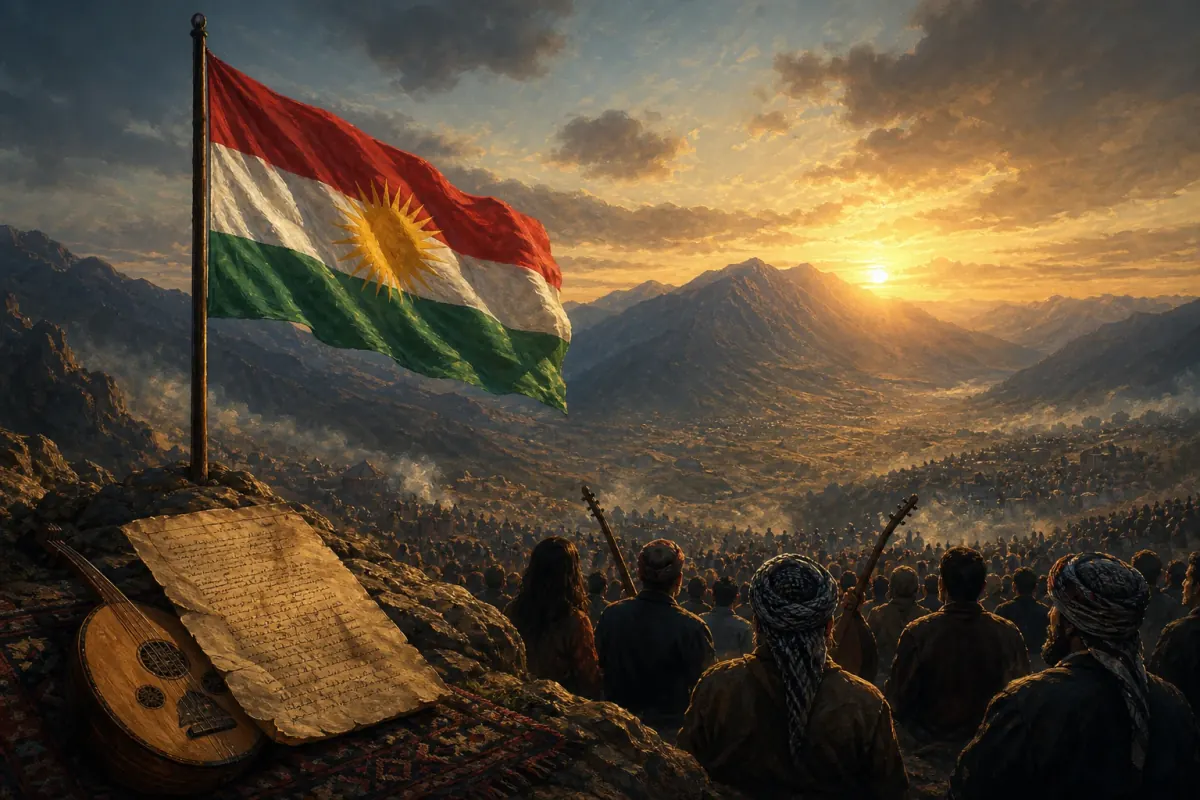
Every Kurd knows the first line. Ey reqîb, her mawe qewmî Kurd ziman: "O enemy, the Kurdish-speaking nation still lives." Ey Reqîb, the Kurdish national anthem, is sung at Newroz fires, football…
In national struggles, the role of music has been as important as the revolutionary movements themselves, and throughout history music has been a powerful force in shaping and expanding those…
If Kurdish music has survived 100 years of borders, exile, and outright bans, it's because of the singers. Twelve voices in particular shaped what we know today as the Kurdish musical canon …
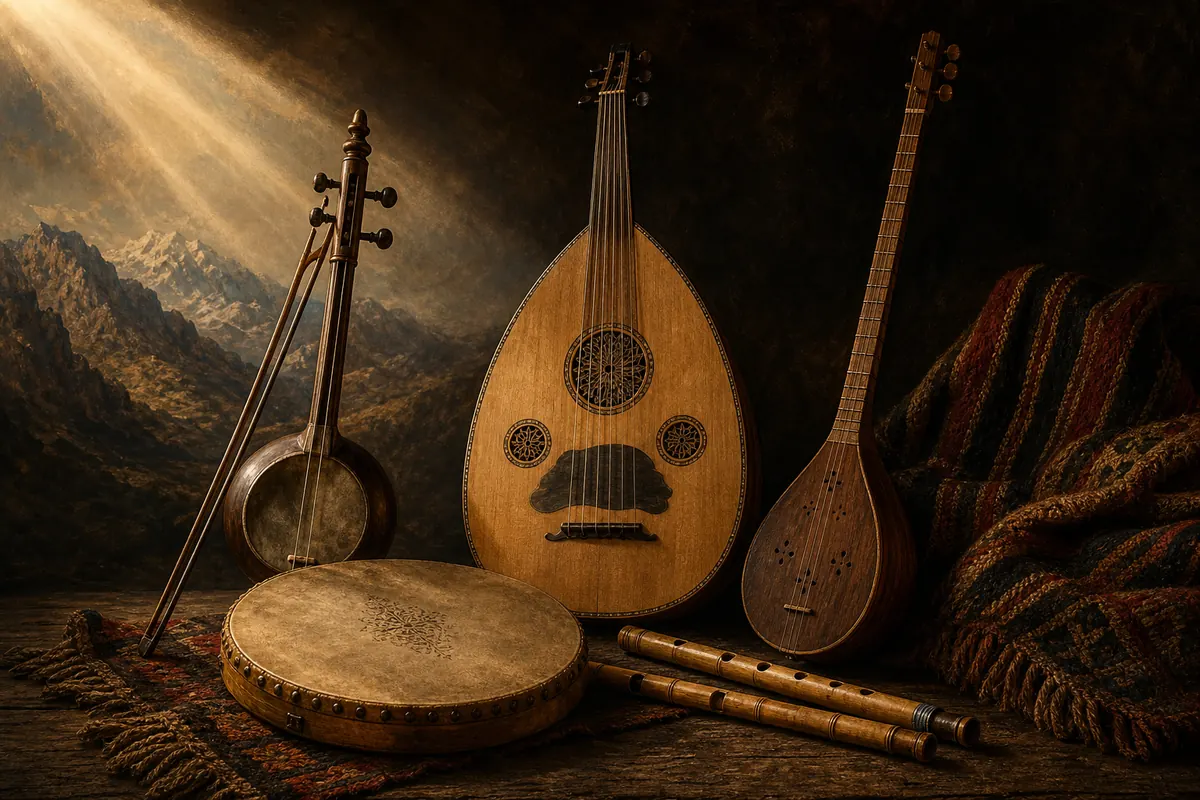
Kurdish music is unimaginable without its instruments. The kamancheh that cries in the high mountain laments. The oud that improvises through long maqam preludes. The daf whose rhythm drives every…
Some songs are bigger than themselves. They become memory devices — small audio capsules of a culture, a region, a generation. These ten Kurdish folk songs are the ones that nearly every Kurd in the…
Kurdish music isn't one tradition — it's two great rivers that share a source. The Sorani (Central Kurdish) tradition flows through Iraqi Kurdistan and parts of Iran. The Kurmanji (Northern Kurdish)…
In a Kurdish village a hundred years ago, there was no internet, no books for most people, no recorded music. But there was the dengbêj.
For most of the 20th century, performing in the Kurdish language could end your career — and in some places, your life. The story of Kurdish music since 1920 is the story of a tradition that survived…
For most of Kurdish history, music wasn't written down — it was remembered. A dengbêj could recite a thousand-line epic from memory; a wedding singer could perform fifty songs without ever seeing a…
Every March 21, Kurdistan turns into something else. Bonfires burn on every hill. Children jump over flames. Govend lines stretch across town squares. Drums play until 3am.
For most of the 20th century, the most important Kurdish music wasn't being made in Kurdistan. It was being made in apartments in Stockholm, in studios in Berlin, in Sufi-influenced concerts in…
If you've spent time listening to Middle Eastern music, you've probably noticed that Kurdish, Persian, Arabic, and Turkish music all sound related — but distinctly different. They share modal scales…
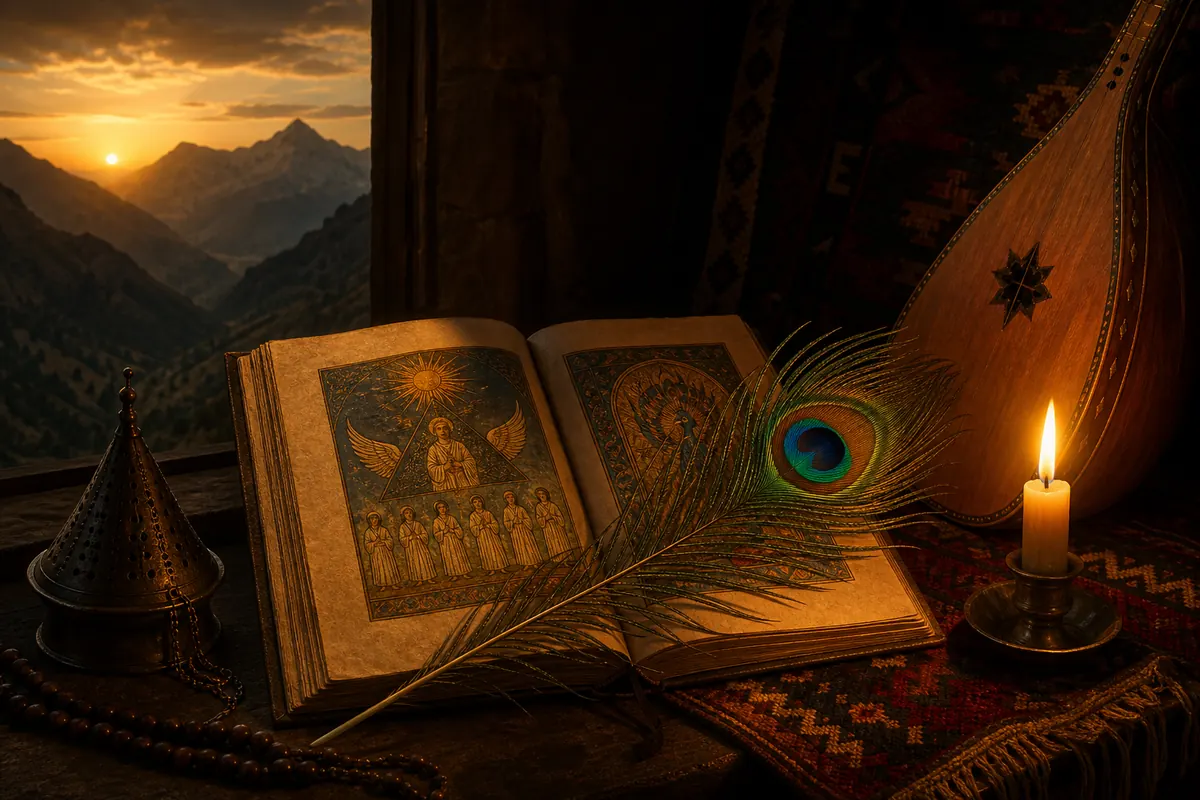
The Yezidis are one of the oldest religious communities in the world. Their faith — Yezidism (Êzîdîtî) — preserves elements of pre-Zoroastrian Iranian religion that nowhere else has survived. Their…
When people talk about Kurdish music, they usually mean Sorani or Kurmanji. But the Kurdish language family is bigger than two main dialects, and the smaller Kurdish dialects have their own musical…
In the 1970s and 80s, Kurdish music became inseparable from Kurdish politics. Songs that were folk lullabies in 1960 became coded political statements by 1980. Songs that were straightforward…